

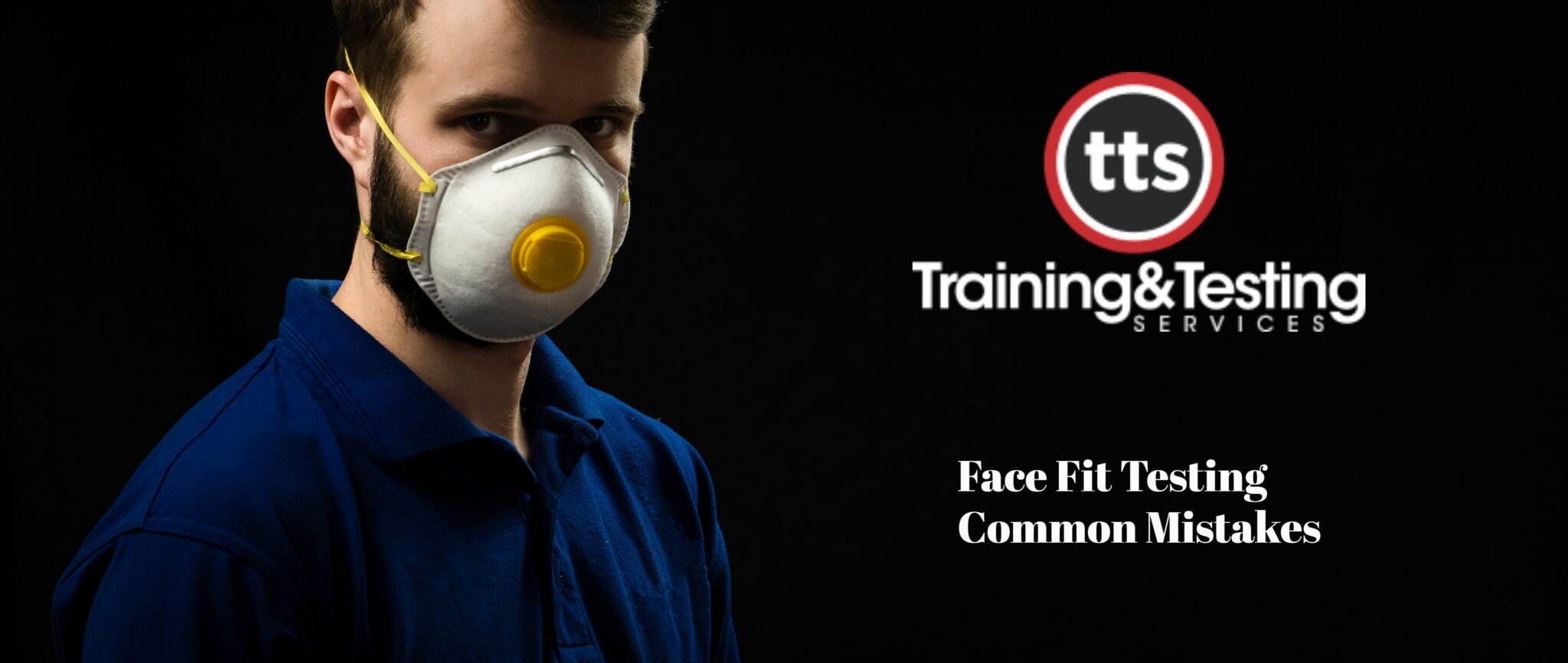
20 Oct Face Fit Testing: 7 Common Mistakes Employers Make (and How to Avoid Them)
Face fit testing is an essential part of protecting employees who wear tight-fitting respiratory protective equipment (RPE). However, despite increased awareness of workplace respiratory protection, we still encounter misunderstandings about what is required and how face fit testing should be carried out.
A face fit test isn’t simply a box-ticking exercise. It’s about ensuring that the mask being worn provides an effective seal against the wearer’s face, helping to prevent harmful airborne substances from entering their respiratory system.
Whether you’re responsible for a small team or hundreds of employees, here are seven common face fit testing mistakes employers should avoid.
1. Assuming One Mask Fits Everyone
One of the biggest misconceptions is that because a particular make or model of respirator fits one employee, it will fit everyone.
Faces come in different shapes and sizes, and so do respirators.
A mask that provides an excellent seal for one person may be completely unsuitable for another.
Employers should ensure that employees are individually face fit tested on the specific make, model, type and size of tight-fitting RPE they will be using.
Our advice: Don’t purchase large quantities of respirators before establishing whether they are suitable for your workforce. Consider face fit testing during the initial selection process.
2. Overlooking Facial Hair
Facial hair remains one of the most common issues encountered during face fit testing.
Even a small amount of stubble can compromise the seal between the respirator and the wearer’s face, potentially allowing contaminated air to enter.
Employees wearing tight-fitting RPE must be clean-shaven in the area where the mask seals against their skin, both during their face fit test and whenever the respirator is worn.
But what happens when an employee cannot shave for medical, religious or other reasons?
There are alternative forms of respiratory protection, including suitable powered hoods, which do not rely on a tight seal against the face and therefore do not require face fit testing.
Our advice: Establish a clear facial hair policy for employees using tight-fitting RPE and consider alternative equipment where appropriate.
3. Believing a Face Fit Test Lasts Forever
Another common mistake is assuming that once an employee has passed a face fit test, they never need another.
A successful face fit test confirms that a particular respirator fitted the individual at the time of testing. It does not guarantee that the same mask will continue to fit indefinitely.
Repeat testing may be necessary following:
- Significant weight loss or gain.
- Substantial dental work.
- Changes to facial features, including scarring.
- A change in the make, model, type or size of respirator.
- Other changes that could affect the face seal.
Although there is no universal legal requirement to repeat face fit testing, employers should establish an appropriate review and retesting procedure based on their circumstances and applicable guidance.
Our advice: Keep accurate records and implement a system for identifying when employees require further testing.
4. Confusing a Fit Check with a Face Fit Test
A fit check and a face fit test are two very different things.
A face fit test is a formal assessment carried out by a competent person to establish whether a particular tight-fitting respirator provides an adequate seal for the wearer.
A fit check, sometimes called a user seal check, is carried out by the wearer each time they put on their respirator.
Both are important, but one cannot replace the other.
Passing a face fit test does not mean employees can neglect their daily fit checks.
Our advice: Ensure employees receive appropriate RPE user training, including how to put on, remove, inspect and check their respirators correctly.
5. Using the Wrong Face Fit Testing Method
There are two principal approaches to face fit testing: qualitative and quantitative.
Qualitative face fit testing is commonly known as the taste test. It relies on the wearer’s ability to detect a test agent and is suitable for certain disposable and reusable half-mask respirators.
Quantitative face fit testing uses specialist equipment to measure leakage into the respirator and produces a numerical fit factor.
Different quantitative methods have different applications. Ambient particle counting equipment, such as the PortaCount or AccuFit, can be used to test suitable half-mask and full-face respirators.
Importantly, qualitative testing is not suitable for full-face masks.
Our advice: Make sure the testing method is appropriate for the respirator being used. If you’re unsure, seek guidance before arranging testing.
6. Failing to Check the Competence of the Face Fit Tester
Not everyone offering face fit testing has the same level of training, experience or independently assessed competence.
The Health and Safety Executive (HSE) states that face fit testing should be conducted by a competent person.
The British Safety Industry Federation (BSIF) operates the Fit2Fit accreditation scheme, which provides a recognised means of demonstrating an individual’s competence in face fit testing.
It’s also important to understand the difference between Fit2Fit accreditation and Fit2Fit approval.
- Fit2Fit accreditation applies to an individual face fit tester who has successfully demonstrated competence in a particular testing method.
- Fit2Fit approval applies to a face fit testing training course that has been assessed against the scheme’s requirements.
These terms are not interchangeable.
Our advice: When arranging face fit testing, look for a Fit2Fit accredited tester. When booking Train the Tester training, look for a Fit2Fit approved course.
7. Treating Face Fit Testing as a One-Off Exercise
Perhaps the most important mistake is treating face fit testing as the entirety of an organisation’s respiratory protection programme.
Even a correctly fitted respirator will not provide adequate protection if it is unsuitable for the hazard, worn incorrectly, poorly maintained or used with inappropriate filters.
Face fit testing is just one part of effective RPE management.
Employers must also consider:
- Selecting appropriate RPE for the hazards present.
- Providing suitable information, instruction and training.
- Ensuring employees know how to wear and check their RPE.
- Inspecting, maintaining and storing reusable equipment correctly.
- Reviewing RPE arrangements when working conditions change.
Our advice: Take a wider approach to respiratory protection. A successful face fit test is important, but it should form part of a properly managed RPE programme.
Getting Face Fit Testing Right
Face fit testing should never be viewed as an administrative inconvenience. It plays an important role in ensuring employees are adequately protected against hazardous airborne substances.
The consequences of poorly selected, incorrectly fitted or improperly used respiratory protection can be serious, particularly where employees are exposed to substances such as silica dust, asbestos fibres, welding fumes or other hazardous airborne contaminants.
Taking the time to select appropriate equipment, use competent testers and provide effective training can make a significant difference to workplace safety.
How Training and Testing Services Can Help
At Training and Testing Services, we specialise in respiratory protective equipment face fit testing and training, supporting businesses throughout the UK.
Our services include:
- Qualitative and quantitative face fit testing, carried out by experienced Fit2Fit accredited testers.
- Fit2Fit approved Qualitative Train the Tester courses, for organisations wishing to conduct their own face fit testing.
- Fit2Fit approved Quantitative Train the Tester courses, covering ambient particle counting methods.
- RPE user training, helping employees understand the correct selection, use and care of respiratory protection.
We offer onsite services throughout the UK, alongside scheduled open training courses at our training centres in Knaresborough, North Yorkshire, and Morden, South London.
Need Face Fit Testing or Training?
Whether you need face fit testing for your workforce, want to introduce an in-house testing programme or simply need advice on the right approach, our experienced team is here to help.
Contact Training and Testing Services today to discuss your requirements, or explore our upcoming Fit2Fit approved Train the Tester courses.
Call: 01423 611030
Website: www.trainingandtestingservices.co.uk
For further guidance, refer to the Health and Safety Executive’s INDG479 – Guidance on Respiratory Protective Equipment (RPE) Fit Testing, and HSG53 – Respiratory Protective Equipment at Work.

No Comments